A Cart Full of Politics: How Washington Quietly Sets Your Thanksgiving Grocery Bill
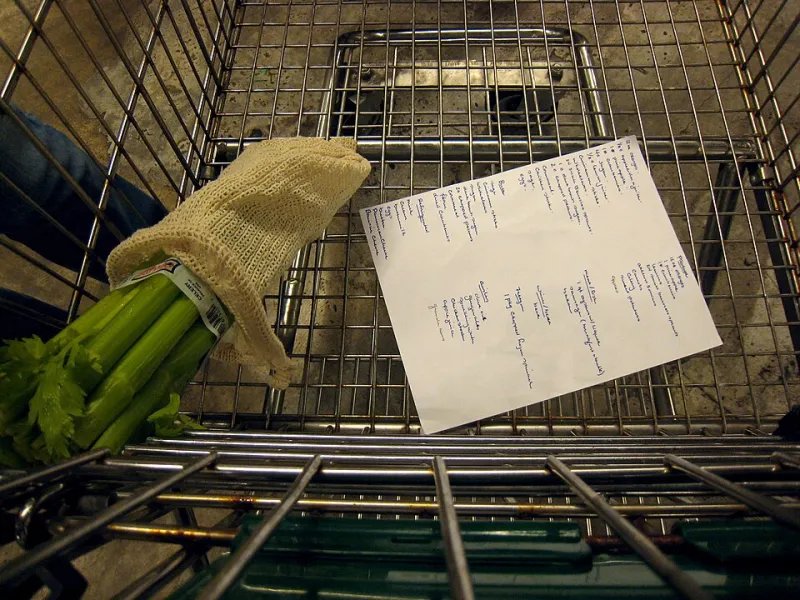
Photo: Bruce Turner from AustinTX, CC BY 2.0, via Wikimedia Commons
Thanksgiving has a way of making big policy feel very small and very expensive at the same time. You are standing in the grocery aisle with a cart, a list and a vague memory of a news alert about tariffs. Somehow, all three are connected.
The holiday meal is a handy supply-chain tour. Turkey, cranberries, stuffing, pie and the foil pan you will absolutely forget to grease all move through rules set or shaped in Washington. Not every price tag is a policy story, and not every policy story ends at the checkout. But if you follow one cart through the store, you can see where trade fights, farm programs and shipping rules quietly enter the picture.
First stop: the turkey aisle
Turkey is the headline act, but the bird is not made by one decision. Feed, fuel, labor, barn equipment, packaging and animal-health rules all matter. So do trade policy and farm programs.
A lot of turkey cost starts with feed. Corn and soybeans are heavily influenced by federal farm policy, including crop insurance and support programs. Those programs are not designed to set a retail turkey price. They help stabilize a farm economy that can swing hard from year to year. But when lawmakers argue over the farm bill, they are arguing over the rules that shape what farmers plant, what they get paid in a bad year and how much risk they carry.
Tariffs can sneak in through the side door. A tariff is a tax on imported goods, usually paid by the importer. It can hit machinery parts, fertilizer, packaging or ingredients. Companies may absorb some of that cost. They may pass some along. They may change suppliers. Over time, those choices can show up in a grocery budget, though rarely in a neat, one-to-one way.
That is the frustrating part for shoppers: the receipt does not come with a line item for “trade policy.” It comes with a total.
Cranberries, sugar and the quiet rules behind the sauce
Cranberry sauce looks simple. The policy behind it is not.
Cranberries are grown in a handful of states and sold at home and abroad. Trade rules affect export markets, and shipping costs affect whether those berries move smoothly. Sugar is even more tangled. The United States has a long-running sugar program that uses price supports, import quotas and tariffs. Supporters say it protects domestic producers and keeps supply stable. Critics say it raises costs for food makers and consumers. Either way, it is one of those policies that rarely gets a holiday shout-out but can sit quietly in the price of pies, cookies and canned sauce.
This is where a casual dinner-table explainer becomes a civics lesson: the cranberry sauce is not just fruit. It is agriculture, trade and transportation in a can.
Stuffing is a supply-chain sandwich
Stuffing is a good reminder that food policy is also packaging policy and trucking policy.
Bread, celery, onions, broth and seasoning all travel. So does the box, the bag and the pallet. Port fees, trucking rules, rail capacity and food-safety requirements can affect cost and timing. None of them are glamorous. All of them can matter when a supplier is trying to get product onto a shelf before the biggest cooking week of the year.
Farm subsidies can play a role here too, but mostly indirectly. When federal policy helps stabilize the price of a crop or the income of a farm, it can influence what gets grown and how much risk growers are willing to take. It does not mean a box of stuffing has a little federal price tag on it. It means the whole system is shaped by rules that are easy to ignore until something goes wrong.
The pie at the end of the cart
Dessert is where the global grocery store really shows up. Pumpkin may be domestic, but pecans, cocoa, vanilla and other ingredients often cross borders. A tariff change, a port backup or a new labeling rule can ripple through the dessert aisle.
Pecans are a useful example. Mexico is a major supplier, and the pecan trade has been shaped by tariffs and trade agreements over the years. Chocolate and vanilla bring in a longer list of countries and shipping routes. Butter and cream are more domestic, but they are still tied to dairy policy and feed costs.
So the pie is not just a pie. It is a small stack of trade relationships, farm programs and freight schedules.
Where Washington actually touches the table
It helps to separate the levers.
Tariffs are taxes on imports. They are paid by importers, not by foreign governments directly. The cost can be absorbed, passed along or worked around. That is why two similar products can be affected very differently.
Farm subsidies and crop insurance are meant to manage risk and stabilize farm income. They can influence supply over time, but they are not a direct dial for retail prices.
Shipping and port rules affect how fast and how cheaply goods move. A rule that sounds technical can still change what is on the shelf and when.
Food-safety and labeling rules can affect where products come from and how they are sold. They are often invisible to shoppers until something is recalled or relabeled.
What to watch as lawmakers return
The current Congress returns this month for its post-election session, and the new Congress arrives in January. That means a fresh round of budget fights, farm bill talks and trade debates is coming.
For your grocery cart, keep an eye on three things. First, the farm bill: it shapes risk management and nutrition policy, and it is always a big pile of money and rules. Second, tariff decisions: even a narrow change can affect food ingredients, packaging and equipment. Third, shipping and port fees: they are easy to ignore and hard to avoid.
A scheduled review of the U.S.-Mexico-Canada trade agreement is also on the radar in 2026. That deal touches a lot of what Americans eat, from produce to meat to processed food. It is worth watching even if you never plan to read the text.
The checkout-line takeaway
Your Thanksgiving dinner is not a single policy story. It is a pile of them, stacked next to the mashed potatoes.
The next time a price looks weird, resist the urge to blame one villain. Ask a better question: which rule, route or risk changed? Sometimes the answer is weather. Sometimes it is a virus. Sometimes it is a tariff, a farm program or a trucking rule that never made the front page.
That is not exactly dinner-table conversation. But it is a pretty good reason to keep an eye on Washington between now and the next grocery run.