Every Bill Sounds Like a Movie Trailer Now — Here's Who Actually Writes the Title
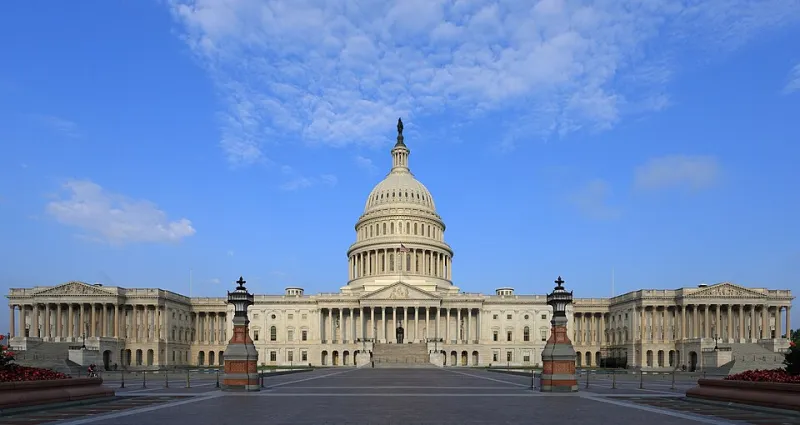
Photo: Martin Falbisoner, CC BY-SA 3.0, via Wikimedia Commons
You have seen the headlines. Something like: Congress Poised to Pass the Protecting Families and Saving Small Towns Act. Sounds great. Who could be against protecting families and saving small towns?
Now here is the less cinematic part. That bill might be three pages long, might authorize a study, and might have been written by a 26-year-old staffer at 11 p.m. on a Thursday. The name is not the law. But the name is very often the point.
Welcome to the strange, petty, genuinely consequential world of bill titles — where the words above the fine print are chosen, focus-grouped, and occasionally fought over like the last parking spot on Capitol Hill.
First, every bill actually has two names
Here is the thing most people never notice: legislation in Congress comes with a long title and a short title.
The long title is the boring one, and it is the honest one. It reads like a sentence from a legal filing: 'A bill to amend title XVIII of the Social Security Act to adjust payment rates for certain rural hospitals, and for other purposes.' Nobody puts that on a lawn sign.
The short title is the marketing. It is the part that gets capitalized in the press release, the part a member of Congress says into a camera, and the part you will remember two years later when you cannot remember a single thing the bill actually did.
By rule and by custom, a bill can name itself almost anything. So the naming process is less 'legal drafting' and more 'branding meeting with a parliamentarian looking over your shoulder.'
The acronym factory never sleeps
If you have heard of a major federal law in the last 25 years, there is a decent chance it spells something.
The USA PATRIOT Act of 2001 is the classic example — a short title reverse-engineered into Uniting and Strengthening America by Providing Appropriate Tools Required to Intercept and Obstruct Terrorism. The CARES Act of 2020 is another. So is the CHIPS and Science Act. So is the STOCK Act, which exists mostly so that everyone can say 'STOCK Act' instead of the whole mouthful about congressional knowledge and insider trading.
Staffers build these. Literally. A committee aide will sit with a thesaurus, a word count, and a dream, trying to make the first letters land on something punchy. Sometimes the acronym comes first and the words get bent around it — a backronym, which is the legislative equivalent of naming your band and then learning to play.
Is it silly? Sure. Does it work? Ask anyone on the street what the PATRIOT Act does versus what its long title says. The acronym won the memory war.
Memorial names are almost impossible to vote against
A big chunk of bill titles are not slogans at all. They are people.
Naming a bill after someone who was harmed, or who died, is one of the oldest traditions in legislating — and one of the most effective. It reframes a policy fight as a moral one. It also makes a 'no' vote extremely awkward to explain back home, which is not an accident.
Congress also has a long, quaint tradition of naming post offices after local figures. These bills are usually uncontroversial, pass in batches, and give a member something nice to put in a newsletter. It is the lowest-stakes version of the same instinct: a name is a story, and a story travels faster than a section heading.
Sometimes the title is the legislative strategy
Here is where it gets interesting — and where a little skepticism pays off.
Both parties run what insiders call messaging bills: legislation written less to become law than to force a vote and generate a headline. The title does the heavy lifting. If the bill is called something like the Stop Something Bad Act, then the floor debate is no longer about the underlying policy. It is about whether you are for the bad thing.
The reverse also happens. A title can be softened to survive a tough committee. A hard-edged draft gets rebranded with words like modernize, streamline, reform, or common-sense — all of which are perfectly fine words that also happen to mean nothing specific.
And then there is the great catch-all: 'and for other purposes.' That phrase appears at the end of a huge share of long titles. It is the legislative equivalent of 'plus whatever else comes up.' It is also a quiet warning that the bill may have grown since you last checked.
A five-minute field guide to suspicious names
You do not need to read 400 pages to get a read on a bill. Try this instead.
- Find the long title. Look for the sentence that starts 'A bill to...' That is the actual description, written by the office that drafted it. If the long title and the short title do not match in spirit, note that.
- Count the effort in the acronym. A natural fit is fine. A forced one — where the words bend over backwards — usually signals a press release was written before the bill was.
- Check the sponsor and the committee. A bill referred to a committee that never meets is not going anywhere. It is a statement.
- Look for 'sense of Congress' sections. These express an opinion. They do not change anyone's life, but they read like action.
- Scan for 'authorizes' versus 'appropriates.' Authorizing something is not the same as funding it. Plenty of beautifully named programs exist entirely on paper.
- Compare the title to the findings section. If the title is about one thing and the findings are about another, you have found the gap.
Why the naming fight actually matters
None of this means a friendly title is a lie. Plenty of bills are exactly what they say they are, and plenty of staffers take real pride in getting the wording right.
But a title is a piece of persuasion, and persuasion is not neutral. It shapes what gets covered, what gets remembered, and what gets repeated at the kitchen table. The fine print still runs your life. The name just decides whether you ever hear about it.
So next time a bill rolls in with a name that sounds like a movie trailer, do the small, slightly annoying thing: read the long title. It is one sentence. It is usually the most honest sentence in the whole package — and honestly, that is the best kind of headline.