The Census Envelope You Almost Recycled Is Quietly Shaping Your Town's Budget
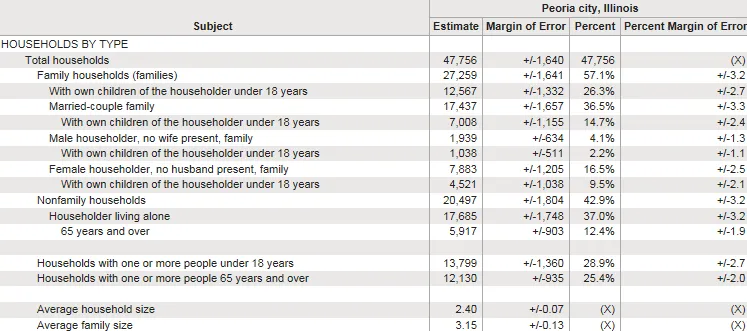
Photo: US Census Bureau, CC BY-SA 4.0, via Wikimedia Commons
Few pieces of mail make a worse first impression than the American Community Survey. It shows up as a fat envelope with a government seal, a lot of small type, and a website that looks like it was built before streaming video. A lot of people figure it’s a scam, a fundraising pitch, or some catalog they never signed up for. Into the recycling bin it goes.
That reaction is understandable. It’s also expensive—not usually for the person who tosses it, but for the town that ends up undercounted.
So What Is This Thing, Exactly?
The American Community Survey, or ACS, is run by the U.S. Census Bureau. It’s not the once-a-decade head count that decides how many House seats each state gets. It’s the annual, ongoing survey that fills in the details: who lives where, how they get to work, what they pay for rent, whether they have health insurance, and a long list of other facts that government agencies, businesses, and local planners use to make decisions.
The Census Bureau mails the survey to a sample of addresses—millions of them each year—rather than every household. If you get one, you’re representing your block, your neighborhood, and people a lot like you. That’s the idea, anyway.
The Questions Are Weirdly Specific
The ACS isn’t a quick five-question form. It asks about household relationships, age, race, Hispanic origin, citizenship, education, employment, income, commuting, housing costs, internet access, disability status, and more. Some questions feel personal. Some feel irrelevant until you realize what they’re used for.
That specificity is the point. A generic count tells you how many people live in a place. The ACS tries to tell you what their lives look like. That’s useful for deciding where to put a new bus route, how to plan for an aging population, or whether a neighborhood has enough English-language services.
It’s also why the survey keeps getting dragged into political fights.
Why Politicians Keep Fighting Over It
The ACS is mandatory under federal law, and that alone makes some people uneasy. Others object to particular questions—especially those about citizenship, income, or household arrangements—as government overreach. Privacy advocates worry about data security and about how estimates can be used. Supporters say the survey is a basic accounting tool, and that skipping it doesn’t protect privacy so much as guarantee that your community gets a less accurate share of the pie.
The citizenship issue is the best-known example. In 2019, the Trump administration tried to add a citizenship question to the decennial census; the Supreme Court blocked it, citing the administration’s stated rationale. The ACS, meanwhile, has long included a citizenship question. That history is one reason some people see the survey as political, even when the questions themselves are routine.
There’s also a quieter fight over money and trust. The Census Bureau has warned for years that response rates are slipping and costs are rising. When people don’t trust government mail, or when they’re worried about how their answers will be used, the survey gets harder and more expensive to run. That’s a problem for everyone who relies on the data.
What Happens When the Envelopes Go Unanswered
Here’s the part that doesn’t make headlines: federal funding formulas use ACS data. So do state and local governments, hospitals, school districts, nonprofits, and businesses. If response rates drop in a particular neighborhood, the estimates for that area get less reliable. In small places, a handful of nonresponses can swing the numbers.
That can mean fewer dollars for roads, clinics, housing programs, or job training—not because the need disappeared, but because the data didn’t capture it. It can also mean local planners make decisions with a blurry picture. A city might underestimate how many people commute by bus, how many households are cost-burdened, or how many residents lack broadband.
The ACS doesn’t decide how many congressional seats your state gets. That’s the decennial census. But it feeds plenty of the statistical sausage that shapes daily life, from where a grocery chain opens a store to how emergency managers plan for disasters.
How to Tell It’s Real (and What You’re Actually Agreeing To)
If you get an ACS envelope, check the return address and the survey URL. The Census Bureau says you can respond online, by mail, or by phone, and you can call the bureau directly to verify a mailing. You should never be asked for a Social Security number, bank account number, or a payment. The survey is free to complete.
You are required by law to answer, though penalties are rarely enforced. The Census Bureau is also required by law to keep your responses confidential and to use them only for statistical purposes. That doesn’t mean everyone is comfortable with it. It does mean the survey isn’t the same as a random phishing email, even if it looks like one.
The Bottom Line
The ACS is easy to mistake for junk mail and easy to ignore. But it’s one of the main ways Washington and your own city hall take the measure of a community. Skipping it doesn’t just leave a blank on a form. It leaves your neighborhood a little less visible when the money and the plans get handed out.
If you get one, take ten minutes to check it out. If you’re not sure, call the Census Bureau. And maybe don’t recycle it before you read the fine print.