The Encore Session: What Congress Can Still Do Before the New Class Shows Up
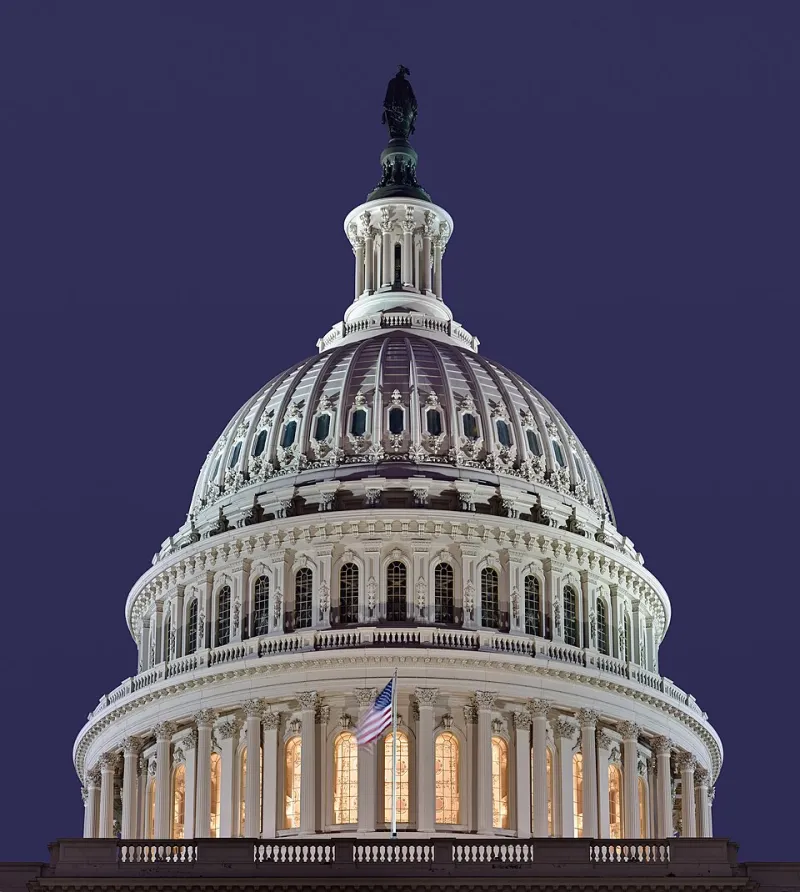
Photo: Diliff, CC BY 2.5, via Wikimedia Commons
The campaign ads are finally gone. The yard signs are fading in the rain. And yet, on November 11, 2026, Congress is not quite done. Lawmakers return to Washington for a post-election stretch known as a lame-duck session — a window when the current Congress finishes old business before the new class arrives in January.
It sounds like inside-baseball stuff. It isn't. This is the stretch when federal spending, military policy, and lifetime judicial appointments can all move while most of us are mentally checked out. Think of it as the encore after the main show: fewer people are watching, but the set list still matters.
First, what actually is a lame-duck session?
A lame-duck session is the period after an election but before the newly elected Congress is sworn in. The Constitution sets the new term to begin in early January, so all the members who lost, retired, or simply didn't run are still on the payroll — and still casting votes — until then.
That's not a loophole. It's how the calendar works. The people who won in November don't officially become members until January. The people who are leaving still have a job to do until their terms expire. In practice, that means a chamber can have a handful of members who know they'll be gone in weeks, voting on bills that will shape the next several years.
There's a reason this stretch has a reputation. Outgoing members are sometimes freer to take tough votes because they don't face voters again. Sometimes they're also less interested in compromise because they have nothing left to lose. Either way, the result is a session that can be unpredictable — and unusually consequential for how little attention it gets.
The three things with a real shot
Not everything gets done in a lame duck. Big, controversial ideas usually wait for the new Congress. But a few categories almost always come up because they have deadlines or must-pass status.
1. Keeping the lights on: spending bills
The federal government runs on money that Congress has to approve. When the fiscal year ends in September, lawmakers often pass a short-term funding patch to buy time. That patch eventually runs out. If it runs out during the post-election session, Congress has to pass another one — or risk a shutdown.
This is the least glamorous item on the list and the one most likely to affect your daily life. A shutdown can mean delayed paychecks for federal workers, paused services, and a lot of uncertainty for families who rely on government programs. Even a short-term funding bill sets the spending levels that agencies use to plan. So when you hear about a "continuing resolution" or an "omnibus," that's not just jargon. It's the blueprint for what your government can actually do next year.
2. Defense policy: the annual authorization bill
Every year, Congress takes up the National Defense Authorization Act, a massive bill that sets policy for the Pentagon. It covers everything from military pay raises to equipment purchases to how the armed forces handle health care and housing. It has passed for more than 60 years straight, which makes it one of the most reliable pieces of legislation in Washington.
That doesn't mean it's easy. The bill often becomes a magnet for unrelated debates, and the post-election window is one of the last chances to get it done before the new Congress starts over. If you care about military families, defense jobs in your state, or how the Pentagon spends tax dollars, this is the bill to watch.
3. Judges: the lifetime appointments
The Senate confirms federal judges, and a post-election session can be a busy time for those votes. Judges serve lifetime terms, so every confirmation can shape the courts for decades. Even if you never set foot in a federal courtroom, the judges who hear cases about regulations, civil rights, and criminal law affect how the government treats everyone.
Confirmations are also one of the clearest examples of why the session matters. The president nominates, the Senate votes, and the results last long after the outgoing members have packed up their offices. If you see a headline about a "floor vote" on a judicial nominee, that's the final step before a lifetime job.
Why outgoing members can be the wild card
Here's the weird part of a lame duck: the people voting are not necessarily the people who will have to live with the political fallout. Members who are retiring or lost their races don't have to worry about the next campaign. That can make them more willing to compromise — or more willing to make a statement.
It also means the balance of power can feel a little off. A member who will be gone in January might cast a deciding vote on a bill that the new Congress would have handled differently. That's not a conspiracy; it's a feature of the calendar. But it's why transparency matters. When the public stops paying attention, the incentives for deal-making behind closed doors get stronger.
The good news is that lame-duck sessions are not secret. Floor schedules, committee hearings, and bill texts are all published. You just have to know where to look.
How to follow along without drowning in procedure
You don't need to learn the difference between a motion to proceed and a unanimous consent agreement. You just need a few reliable shortcuts.
- Check Congress.gov. It's the official database for bills, votes, and schedules. Search for "appropriations," "National Defense Authorization Act," or "judicial nomination" to see what's moving.
- Look at the floor schedules. The House and Senate post their daily and weekly schedules online. If a bill is listed for a vote, that's your cue to pay attention.
- Watch C-SPAN. It's not exciting television, but it's the actual floor debate. You can also search for clips of specific members if you want to know what your representative said.
- Follow committee markups. Most of the real work happens before a bill reaches the floor. Committee websites post hearing notices and bill text, and many hearings are streamed live.
- Use plain-language explainers. Sites like this one, plus nonpartisan resources like the Congressional Research Service, can help translate the jargon. You don't need a law degree to understand what a bill does.
What it means for you
The lame-duck session is not about political theater. It's about the basic machinery of government. Spending bills decide whether programs keep running. Defense bills decide how the military operates. Judicial confirmations decide who interprets the law. None of that is abstract. It shows up in paychecks, health care, and the courts.
So even though the election is over, the decisions aren't. The new class arrives in January, but the old one still has a few moves left. If you've ever wondered why Washington seems to do its most important work when nobody's watching, this is your chance to watch anyway.
Set a calendar reminder for the next floor vote. It's the simplest way to make sure the encore doesn't happen without you.