From Group Chat to Council Chambers: The Strange Journey of a Local Rumor That Became Law

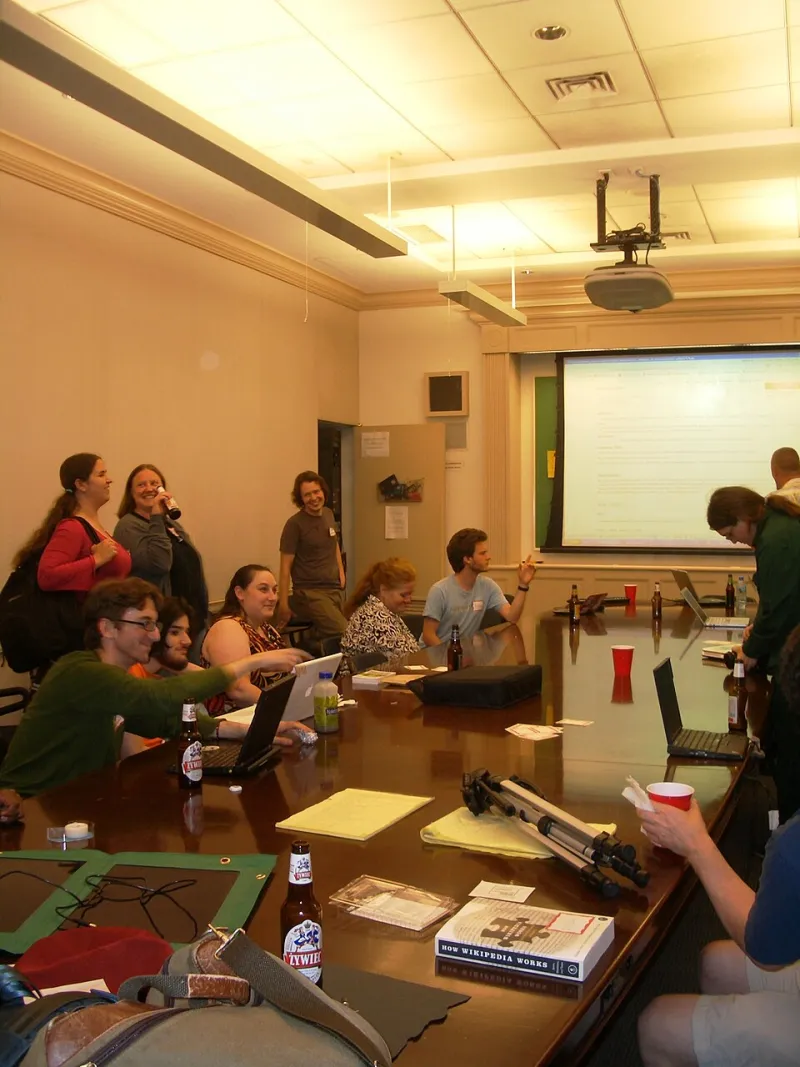
Photo: Ciara Ní Riain, CC BY-SA 4.0, via Wikimedia Commons
Every town has that one Facebook group. You know the one — part lost-dog bulletin, part complaint department, part digital town square. And every so often, a post shows up there that doesn't just get comments. It gets traction.
Maybe it's a blurry photo of a construction site with a caption like, "So THIS is what they're not telling us about the new development??" Maybe it's a claim about a school board member, a zoning change, a parking lot nobody voted for. Within 48 hours, half the town is worked up. Within three weeks, there's a packed public comment session and an agenda item with an actual ordinance number.
How did we get from a screenshot to city hall? Let's trace the whole journey — because once you see how it works, you'll never unsee it.
Stage One: The Spark (Usually a Half-Truth)
Most local rumor campaigns don't start with a lie, exactly. They start with a distortion — a grain of truth stretched until it snaps.
Take a classic example: a city announces a rezoning proposal for a vacant lot. The actual plan is a mixed-use building with some affordable units. But by the time it's been screenshotted, captioned, and reshared, it's "high-rise luxury condos that will price out the whole neighborhood." Technically wrong, emotionally loaded — and that's the point. Anger travels faster than nuance, especially in a group with 12,000 members and a comments section that never sleeps.
Here's the thing to watch for: real policy documents are boring on purpose. When a post makes a zoning change sound like a thriller plot, that's your first clue something's been lost in translation.
Stage Two: The Concerned Citizens Group That Came Out of Nowhere
This is where things get interesting — and where the line between organic outrage and manufactured outrage starts to blur.
A "grassroots" opposition group appears. It has a name like Neighbors for Responsible Development or Families for Our Community. It has a logo. It has a petition with 800 signatures. It sounds legit.
But dig a little, and sometimes the story gets weird. The group's website was registered three days after the Facebook post went viral. Its contact email traces back to a political consulting firm two states away. The "local residents" quoted in its press release can't be found in any local directory. Its funding, when disclosed at all, comes from — surprise — the developer's competitor, or a union with its own stake, or a national advocacy outfit using your town as a test case.
This is called astroturfing: fake grassroots, manufactured to look like a spontaneous community uprising. It's not always sinister — sometimes it's just a well-organized advocacy group dressing up in local clothes. But it means the "overwhelming community opposition" your council member keeps citing might be three people and a PR budget.
Stage Three: The Public Comment Marathon
By the time the issue hits the council agenda, the rumor has fully metabolized into a "movement." The public comment session runs four hours. Speaker after speaker repeats the same three talking points in the same order — sometimes reading from the same printed sheet.
Council members, who often have tiny staffs and day jobs, absorb the pressure. A proposal that would've passed quietly in February now dies in committee, or gets watered down, or gets tabled indefinitely. The rumor has effectively become policy — or at least, policy's undoing.
And here's the kicker: sometimes that outcome is good! Genuine community pushback has killed plenty of genuinely bad ideas. The problem isn't that citizens showed up. The problem is when we can't tell the difference between citizens and a script.
Your Field Guide to Spotting a Manufactured Uprising
You don't need a journalism degree to do a little digging. Next time a local issue blows up, run through this checklist:
- Check the group's age. Search the secretary of state's nonprofit registry or a simple domain lookup. A "community coalition" that's younger than the controversy deserves a raised eyebrow.
- Follow the money. Look for a disclaimer at the bottom of petitions, flyers, and ads — "Paid for by..." is legally required in most political advertising, and it's where astroturf campaigns slip up.
- Look at who's talking. If the same five names appear on the petition, the op-eds, and the comment session, that's not a movement — that's a mailing list.
- Read the actual document. Most municipal proposals are posted online. Skip the screenshot. Read the boring original. Nine times out of ten, the viral version is missing a key detail.
- Notice the template. Identical phrasing showing up in comments from different accounts? Copy-paste campaigns leave fingerprints.
None of this means you should dismiss community opposition wholesale. It means you should demand the same thing from online outrage that you'd demand from a press conference: receipts.
The Bottom Line
Local government runs on proximity — the closest level of power to your actual life, and the easiest one for a well-placed rumor to sway. A group chat isn't inherently bad; sometimes it's the only watchdog a small town has. But the next time a post in your neighborhood group sets your blood pressure spiking, take five minutes before you share it. Check who benefits, check who's behind it, and check the original source.
Because the distance between a meme and a municipal vote is shorter than you think — and the people who know that best are counting on you not to look.