No Algorithm, No Autoplay: What 24 Hours Inside a Real Newsroom Taught Us About Choosing the News
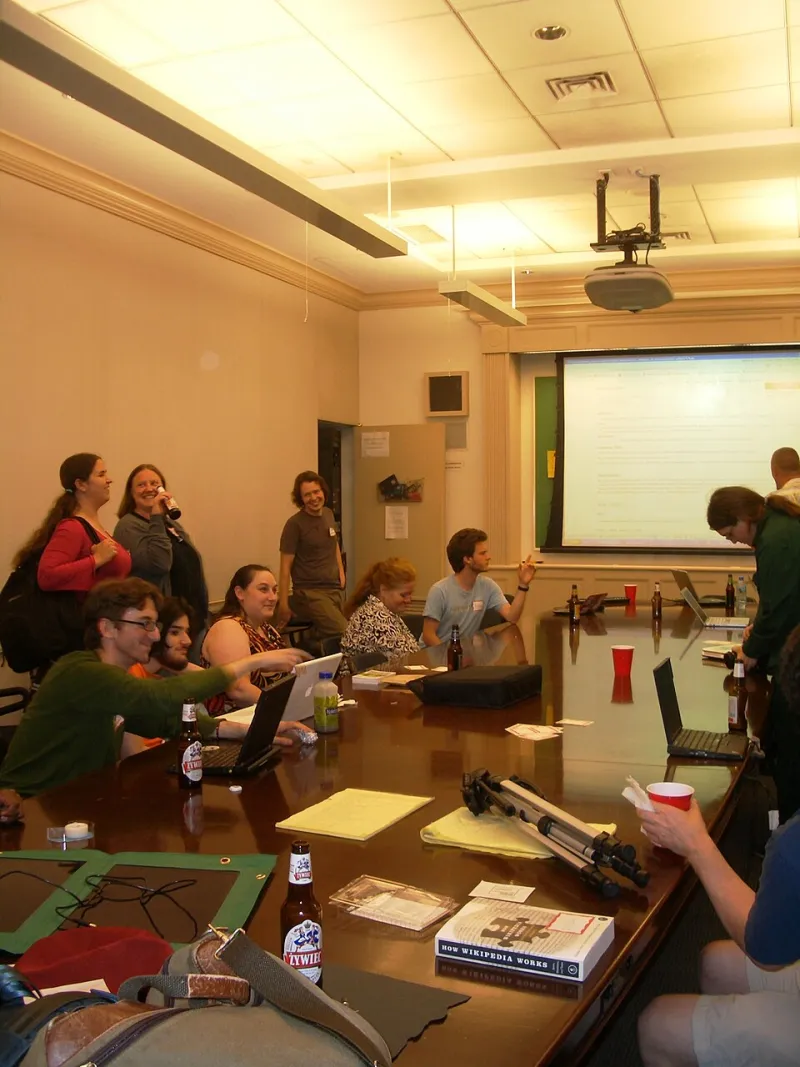
Photo: Staeiou, CC BY-SA 3.0, via Wikimedia Commons
Ever wonder why your phone knows about a celebrity feud in under four minutes, but it took you three days to hear about the water rate hike in your own city? We did too. So we did something a little unusual: we spent 24 hours inside a working newsroom — a mid-sized local paper in the Midwest — to watch real people decide what counts as "the news."
What we found was refreshing, slightly chaotic, and completely algorithm-free.
7:15 A.M.: The Morning Argument
The day starts the way most good things do: with coffee and a disagreement. The editor's morning meeting is basically a standup debate. The metro reporter pitches a story about a proposed zoning change. The managing editor pushes back — "Is this a story or a spreadsheet?" — and they hash it out for ten minutes.
Nobody in that room is looking at a dashboard. Nobody asks, "What will get clicks?" They ask, "What will our readers need to know by Friday?"
That's the core difference between human curation and a feed. An algorithm optimizes for how long you stay. An editor optimizes for whether you'll be an informed neighbor at the school board meeting.
The Story-Killing Hour
Here's something that surprised us: a huge part of the job is not publishing. By noon, the editors had killed two stories outright.
One was a press release from a state agency dressed up as news — the classic "official announces official thing" non-story. The other was a crime blotter item that was technically accurate but, in the editor's words, "tells nobody anything they can use."
Compare that to the feed-driven machine, where volume is the point. When the goal is keeping you scrolling, publishing everything is a feature, not a bug. In a human newsroom, saying no is the whole job description.
Ranking Is a Judgment Call, Not a Formula
Around 2 P.M., the front page gets built. And "built" is the right word — it's an act of design, not math.
The lead story that day was a school funding fight that had zero viral potential. Why did it lead? Because the vote was the next morning, and after the vote, the window closes. Editors call this "news you can act on," and it's the single biggest thing missing from algorithmic feeds, which have no concept of a deadline that matters to your actual life.
Meanwhile, a story that had gotten big engagement numbers earlier in the week — a viral local video — got demoted to a brief. "People already saw it," the editor shrugged. "Running it again is just noise."
Try explaining that to a recommendation engine.
Why This Matters for Your Feed
Okay, so most of us aren't subscribing to a print paper and reading it over toast. But the newsroom's logic — curate, prioritize, cut — is something you can steal for yourself. A few practical moves:
- Pick two sources with humans in charge. A national outlet plus a local one covers the gap between "what Congress did" and "what it means for your street."
- Check headlines once or twice a day, not forty times. The important stuff will still be there. The important stuff is always still there.
- Follow the byline, not the trend. Reporters who've covered a beat for years are walking libraries of context. Algorithms can't replicate that; neither can aggregators.
- Beware the "developing story" that never develops. Feeds love to re-serve the same news with a new timestamp. If nothing new happened, it's not new.
The Last Hour: A Correction, On Purpose
We'll leave you with the moment that stuck with us most. At 6:40 P.M., an editor caught a small error in a story about a county budget figure. Instead of quietly fixing it, the paper ran a visible correction.
"Readers forgive mistakes," she told us. "They don't forgive being misled."
That's the whole philosophy in one sentence. A newsroom run by people can be embarrassed, and that embarrassment is a quality-control system no algorithm has. The next time you see a headline that reads like a real person made a careful choice — it probably was one. Cherish those. And maybe subscribe to the folks making them.