Skip the Campaign Ads: The Ballot Races That Actually Set Your Rent
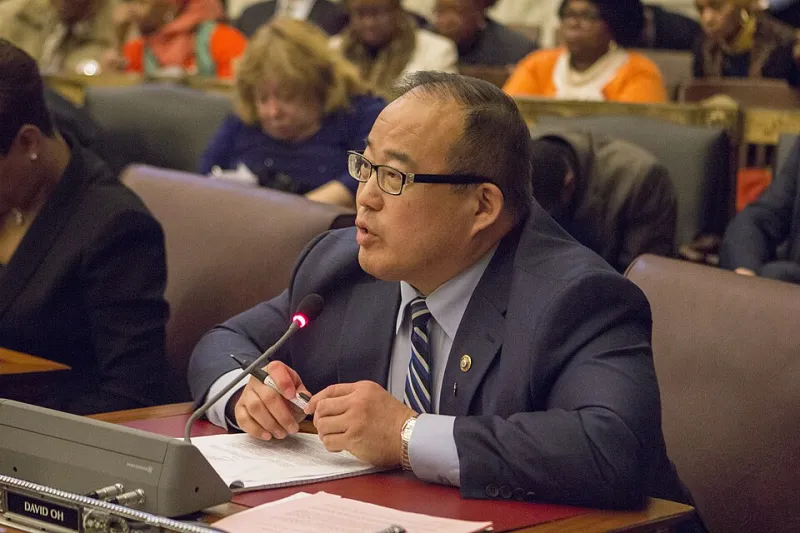
Photo: Philadelphia City Council, Public domain, via Wikimedia Commons
Here's a fun party trick: ask your friends who's responsible for rising rents. Most will say Congress. Some will say landlords. A few might mutter something about 'the economy.'
Almost nobody will say 'the five people on my city council,' even though that's often the closest answer to the truth.
If you've been wondering why your rent keeps climbing no matter who wins the White House, the real action is happening a lot closer to home — in council chambers, county boardrooms, and yes, on the ballot itself.
Washington Doesn't Set Your Rent. Your City Does.
The federal government has remarkably little say over housing costs. Sure, there are housing vouchers, tax credits, and the occasional big-name bill, but the day-to-day rules that determine how much apartments cost? Those are almost entirely local.
Think about it. Your city decides:
- How many homes can be built (zoning)
- What kind of homes are allowed (single-family only? Apartments? Duplexes?)
- How long it takes to get permits (sometimes years, sometimes months)
- Whether landlords can raise rent without limits (rent stabilization ordinances)
- What fees developers pay, which get passed along to tenants
Every one of those decisions is made by elected officials whose races most voters skip entirely. In plenty of cities, local turnout barely cracks 25% in non-presidential years. That means a small, motivated group of neighbors is effectively setting housing policy for everyone else.
A Case Study in Progress: One City, One Ballot, One Big Decision
Take a look at what's playing out in communities across the country right now. In Minneapolis, city leaders spent years debating whether to end single-family-only zoning — a rule that made it illegal to build duplexes or small apartment buildings on most residential land. The council eventually approved it, and while it hasn't been a magic fix, it opened the door to more 'missing middle' housing: the duplexes, triplexes, and small complexes that used to be everywhere in American cities.
Meanwhile, in Austin, city officials rewrote land-use rules to allow smaller lots and more homes per neighborhood. Rents there have actually dipped recently — a rarity in the US — largely because a wave of new apartment construction flooded the market.
Contrast that with cities that have gone the other direction. Places where councils blocked nearly every new development for decades are now seeing some of the steepest rent increases in the nation. When you make it illegal to build enough homes for the people who want to live there, prices do what prices do.
Rent Control: The Most Debated Few Lines on Any Ballot
Then there's the rent control question — one of the most emotionally charged issues in local politics.
Some cities, like St. Paul, Minnesota, have passed strict rent stabilization measures at the ballot box. The results were... complicated. Supporters celebrated caps that protect tenants from sudden spikes. Critics pointed to a sharp slowdown in new apartment construction shortly after, which some economists argue makes the long-term shortage worse.
Other places have taken a middle path: rent stabilization that only applies to older buildings, or 'just cause' eviction rules that protect tenants without capping prices.
Here's the thing — there's no national consensus here, and honest people disagree about the tradeoffs. But there IS a consensus on one point: these decisions happen locally, and they show up on your ballot, often buried toward the bottom in smaller type.
Your Pre-Voting Cheat Sheet
So how do you figure out which races and measures actually matter for your wallet? Before the next election, spend twenty minutes doing this:
-
Look up your city council and county commission races. These folks vote on zoning, permits, and development fees. Find out which candidates support building more housing and which prefer blocking it.
-
Read the ballot measure summaries — all of them. Anything mentioning 'land use,' 'zoning,' 'housing,' or 'rent' is directly relevant to your monthly budget.
-
Check who's funding the campaigns. Ballot measures about housing attract serious money from developers, landlord associations, and tenant advocacy groups. Follow the donations to understand what's really at stake.
-
Show up for the boring elections. Odd-year municipal races, special elections, school board contests with land-use power — these are the ones where a few hundred votes can flip a council majority.
The Bottom Line
Your rent isn't set by a guy in Washington. It's set by a planning commission vote, a zoning map, a permit backlog, and a council election you may have slept through.
The good news? That also means you have more power than you think. Local elections are small enough that your vote genuinely counts more — sometimes by orders of magnitude. The people who show up write the rules. This year, consider being one of the people who shows up.
Your future rent bill will thank you.