Your Zip Code Secretly Decides How Much Your Vote Is Worth — Here's the Cheat Sheet
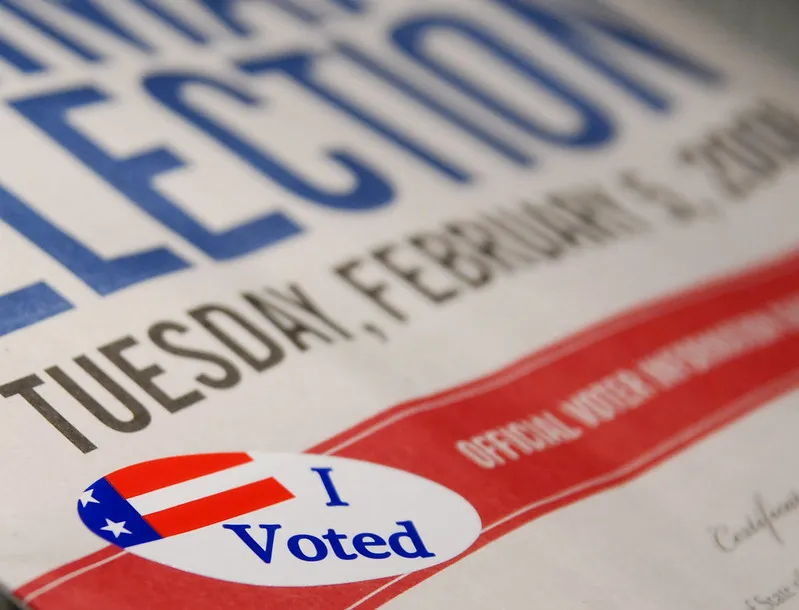
Photo: Denise Cross Photography, CC BY 2.0, via Wikimedia Commons
Here's a fun party trick: ask three friends from different states to describe their primary ballot, and watch the confusion unfold. One of them votes in a wide-open free-for-all. Another has to register with a party just to participate. The third skipped the primary entirely because their state only lets you pick one candidate per race — no ranking, no second choices, no takebacks.
Same country. Same election year. Completely different games. And the rules matter — sometimes more than the candidates. Let's break down the weird, wonderful, occasionally baffling rulebook of American elections, state by state.
Jungle Primaries: When Everyone's on the Same Ballot
Most states run primaries the traditional way: Democrats pick a Democrat, Republicans pick a Republican, and the winners face off in November. Simple, right?
California and Washington said, "Nah," and adopted what's officially called a top-two primary — though everyone just calls it a jungle primary. In these states, all candidates from all parties appear on the same primary ballot, and the top two vote-getters advance to the general election. Party affiliation? Irrelevant to who advances.
What does that mean in practice? Sometimes two Democrats end up competing in the general election, because they finished first and second in the primary. That's happened in California multiple times, including a famous 2018 congressional race in the LA area where no Republican even made the November ballot. If you live in a top-two state, your general election might be decided in June — and your November vote might feel like a formality. Annoying? Maybe. But it also means moderate candidates who can win crossover votes have a real shot.
Ranked Choice: Your Ballot Gets a Backup Plan
Now head to Maine or Alaska, and your ballot gets a makeover. Instead of picking just one candidate, you rank them: first choice, second choice, third.
Here's the mechanic: if nobody wins a majority of first-choice votes, the candidate in last place gets eliminated, and their voters' second choices get redistributed. Repeat until someone crosses 50%.
Alaska put this system on display in spectacular fashion in 2022, when the special election for its House seat came down to the final rounds of vote-counting — with national attention glued to each tally. The upshot: candidates have an incentive to be at least tolerable to their opponents' supporters, since your second-place ranking might matter. If you live in a ranked choice state, don't leave second choices blank. That's literally half your ballot's power sitting unused.
Runoffs: When Nobody Clears the Bar
In much of the South — Georgia, Louisiana, Mississippi, Texas — winning a primary isn't enough. You need a majority, not just a plurality. If the top candidate gets 45% and nobody else comes close? Doesn't matter. Head back to the polls for a runoff.
Georgia's 2021 Senate runoffs became national events, with months of additional campaigning and record turnout for a second-round election. For voters in runoff states, the lesson is brutal but simple: low-turnout second elections can flip outcomes. The candidate who squeaked by in round one can absolutely lose in round two. If your state has runoffs, the election isn't over when it's over.
District Maps: The Invisible Hand on the Scale
And then there's the quiet one — the rule so boring it hides in plain sight. District lines.
Most state legislative and congressional seats are decided within drawn districts, and whoever draws those lines gets a say in who they contain. When maps are drawn to favor one party, individual races can be over before a single vote is cast — which is why in some heavily gerrymandered states, the primary is the only election that matters. The general is a foregone conclusion.
Some states have tried to take the maps out of politicians' hands. California and Arizona use independent redistricting commissions. Michigan voters approved one by ballot initiative in 2018. If you live in a commission state, your vote in downballot races probably carries more weight than your cousin's does two states over — same election, different math.
So What Does Your Ballot Actually Mean?
Quick cheat sheet:
- Top-two primary state (CA, WA): The real showdown might happen in June. Vote early, vote often — well, once, but seriously.
- Ranked choice state (ME, AK): Rank everyone you can live with. Second choices win elections.
- Runoff state (GA, LA, TX, MS): Mark your calendar for round two. Low turnout is an opportunity for whoever shows up.
- Commission-drawn districts: Your general election vote matters more than average.
- Legislature-drawn districts in a lopsided state: The primary is your Super Bowl.
None of this is secret — it's all public law. It's just never explained in plain English, which is kind of the problem. The rules of the game shape the game, and knowing them means knowing where your single vote punches hardest. Check your secretary of state's website, learn your state's particular quirks, and vote like the rulebook actually matters.
Because it does.