Spoiler: A Lobbyist Probably Wrote That Bill You Keep Hearing About
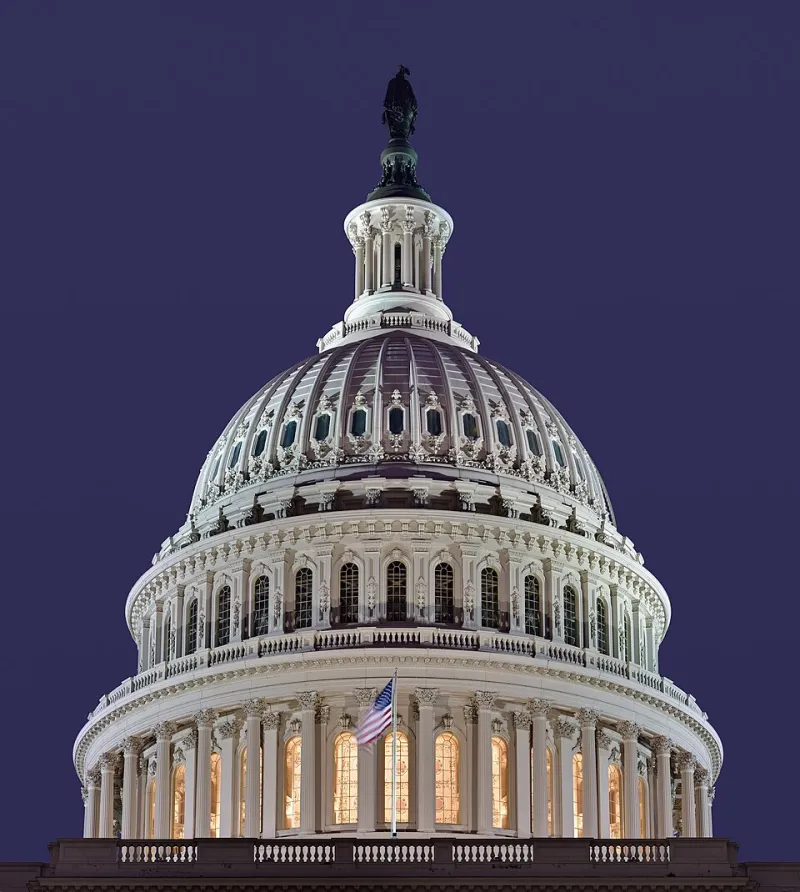
Photo: U.S. Senate. Office of Senate Curator.?, Public domain, via Wikimedia Commons
You've seen the campaign ad. The candidate, arms crossed, jaw set, promising to 'crack down' on something or 'fight for' something else. Sounds great. Very cinematic.
But here's what the ad doesn't show you: when that candidate actually gets to Washington (or your state capitol), they don't sit down with a legal pad and personally draft a 400-page bill. That's not how any of this works.
So who writes the laws? Pull up a chair, because this is one of those 'wait, seriously?' rabbit holes.
First, Meet the Actual Drafters: Legislative Counsel
Every legislature has an office full of lawyers whose entire job is turning ideas into legally operable text. Congress has the Office of the Legislative Counsel — a nonpartisan shop staffed by attorneys who've spent years mastering the byzantine grammar of federal statutes.
When a senator says 'draft me a bill on this,' these are the folks who translate the idea into precise legal language. They decide what words like 'shall,' 'may,' and 'notwithstanding' do in a given sentence. They structure the amendments, cross-reference the existing law, and try to make sure the whole thing doesn't collapse the first time a court looks at it.
They're nonpartisan, they're extremely good at their jobs, and almost nobody outside the building knows they exist.
Second, Meet the Staffers (The Real Workhorses)
A typical member of Congress has a small staff — often just a handful of aides handling an entire state's worth of constituent mail, committee work, and policy. The young, ambitious ones on the legislative side are called legislative assistants, and they become the de facto experts on whatever topics they're assigned.
If your senator's office is working on a farm bill, there's probably a 28-year-old legislative assistant who now knows more about crop insurance than anyone else in the building. That person will sit in meetings, negotiate with other offices, and yes — often type the first draft of the actual legislative text.
Is that a scandal? Not really. It's just math. There are 535 members of Congress and thousands of issues. Nobody can personally master all of it. Staffers are the reason the machine functions at all.
Third, and Here's the Fun Part: The Outside Experts
Now we get to the part that raises eyebrows.
When Congress tackles a technical subject — say, drug pricing rules or banking regulations — the offices that actually understand the subject matter in granular detail are often found in three places: federal agencies, think tanks, and interest groups.
And interest groups have gotten very good at being useful. Lobbyists frequently provide draft language, technical corrections, and data to congressional offices. Sometimes a whole section of a bill traces back to language written by an industry association or an advocacy nonprofit. There's even a term for it in Washington: 'legislative subsidy.'
Before you clutch your pearls, consider both sides of it:
- The good version: A patient-advocacy group with deep expertise helps draft language that actually helps people. A water utility association flags a technical error that would've broken municipal bonds. Expertise is genuinely valuable.
- The bad version: An industry quietly inserts a provision that benefits one company. It happens — and it happens because the people reviewing the bill are stretched thin and the industry is the only one paying close attention.
The difference usually comes down to transparency and whether competing viewpoints got a seat at the table.
Why Laws Look Nothing Like Campaign Promises
Ever wonder why a bill called the 'Affordable Something Act' is 900 pages long and full of provisions nobody mentioned on the campaign trail? A few reasons:
- Coalition math. To pass, a bill needs 218 House votes and 60 Senate votes (usually). Every vote extracted a concession, and each concession is now a paragraph in the text.
- Existing law is a maze. Most bills amend laws that already exist, which means the language is full of phrases like 'strike subsection (c) of section 502.' Not exactly stump-speech material.
- Someone has to implement it. The details that determine whether a promise becomes real — eligibility thresholds, timelines, enforcement — are exactly the details that never made it into the speech.
So the gap between promise and text isn't always cynicism. Sometimes it's just the difference between a slogan and a statute.
The Takeaway
Next time a bill makes headlines, skip the press release and go straight to the text — it's all public on Congress.gov. Look up who sponsored it, then peek at the committees it passed through. You'll start noticing patterns: which offices did the heavy lifting, which outside groups praised it, who's suddenly opposed.
Laws are written by people, not parties. And once you know who those people are, the whole process gets a lot less mysterious — and a lot more interesting.