Deadline Drama on Repeat: The Real Reason Congress Keeps Playing Budget Chicken
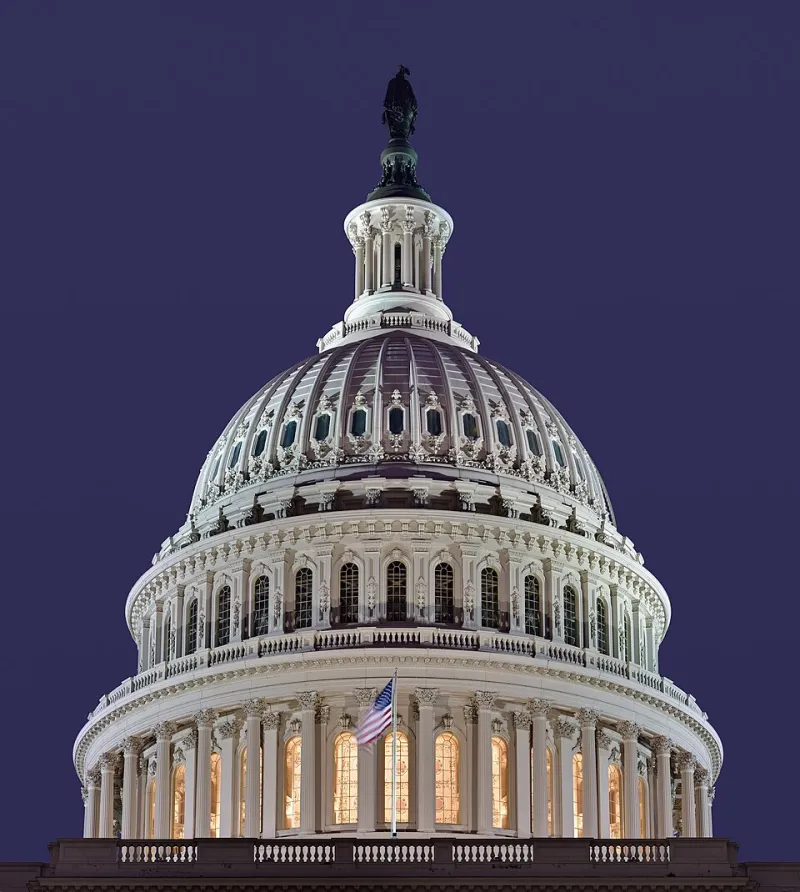
Photo: Diliff, CC BY 2.5, via Wikimedia Commons
If you feel like you've watched this movie before, you have. Congress bumps up against a funding deadline, both parties trade warnings, a shutdown looms, cable news counts down the hours, and then — usually — some combination of a short-term patch and a lot of finger-pointing gets us through.
It's tempting to just tune it out. But understanding why this keeps happening actually makes the whole circus less maddening — and helps you know when to genuinely worry. So let's get into it.
First, How the Budget Is Supposed to Work
On paper, it's straightforward. Congress is supposed to pass 12 separate appropriations bills by October 1, the start of the federal fiscal year. The president signs them, agencies get their money, everyone goes home.
In practice, Congress almost never finishes all 12 on time. To keep the government open in the meantime, lawmakers pass a "continuing resolution" — a temporary extension of existing funding at current levels. And when those CRs run out with no deal in sight? That's when the government "shuts down," meaning non-essential federal operations pause and hundreds of thousands of workers are told to stay home or work without pay until it's resolved.
This Wasn't Always the Pattern
Here's a surprise for a lot of readers: shutdowns as we know them are a relatively modern phenomenon. Before the 1980s, funding gaps generally didn't stop agencies from operating. A Justice Department legal opinion in the early 1980s changed that, interpreting federal law to mean agencies must cease non-essential activities when money lapses.
The modern era of full shutdowns kicked off in the mid-1990s, when a standoff between President Clinton and congressional Republicans closed agencies twice. Then came the 2013 shutdown over the Affordable Care Act, and the record-setting 35-day shutdown spanning late 2018 into early 2019 — the longest in history, triggered by a dispute over border wall funding.
Each round followed the same arc: a policy fight gets attached to the must-pass funding bill, neither side wants to blink first, and the calendar does the rest.
The Incentives Reward Waiting
This is the part that explains almost everything. For an individual member of Congress, there's very little upside to being the reasonable one who compromises early — and real downside to being seen as the one who gave in. Waiting until the deadline, or past it, often plays better with the voters and activists who matter most in primaries.
Add in a few structural quirks:
- The Senate's math. Passing anything requires 60 votes to break a filibuster in most cases, which means the minority party always has leverage over the calendar.
- The House's factions. In narrow majorities, a small group of holdouts can effectively veto a deal, forcing leadership into last-minute scrambles.
- The hostage dynamic. Because funding bills are must-pass, they're the one vehicle guaranteed to get a presidential signature — making them irresistible places to attach unrelated fights.
Put those together and you get a system where the drama isn't a malfunction. It's a rational response to the rules as written. Nobody's waiting until the last minute by accident; they're waiting because waiting works — or at least, because it's less costly politically than moving early.
Does It Actually Cost Anything?
Sometimes, yes. The 2018–19 shutdown stalled federal contractors' paychecks (which were never fully repaid), delayed food assistance and airport staffing headaches, and shaved a measurable — if temporary — bite out of economic growth, according to congressional economists. Even near-shutdowns carry costs: agencies burn resources preparing contingency plans, and the constant uncertainty makes it harder for federal offices to hire and keep people.
The full picture is murkier than the headlines suggest, though. Most shutdowns are short, most federal employees get back pay, and markets usually shrug. The real damage is cumulative: each round of brinkmanship chips away at the sense that the people running the government can run the government.
What Happens Next (And What Usually Happens)
Here's the pattern worth memorizing: the overwhelming majority of these standoffs end in a continuing resolution or an omnibus spending package that kicks the can down the road. Genuine catastrophe is rare, and both parties know that voters punish whoever looks most responsible for a shutdown — which is why the final act usually arrives with hours to spare.
Some reformers have floated fixes: automatic continuing resolutions that keep funding at current levels if Congress misses a deadline, or biennial budgets that only need passing every two years. None have gained enough traction, for the same incentive-driven reasons described above.
The Takeaway
The next time you see a shutdown countdown on your screen, you'll know what's underneath it: a budget process designed decades ago, political incentives that reward the bluff, and a deadline both sides use as a weapon. Most of the time, it resolves the way it always does — late, messy, and with everyone already looking toward the next deadline.
Annoying? Absolutely. Mysterious? Not anymore.